Abstract 62 Article Swipe
 YOU?
·
· 2022
· Open Access
·
· DOI: https://doi.org/10.4103/2230-8210.363751
· OA: W4320920335
YOU?
·
· 2022
· Open Access
·
· DOI: https://doi.org/10.4103/2230-8210.363751
· OA: W4320920335
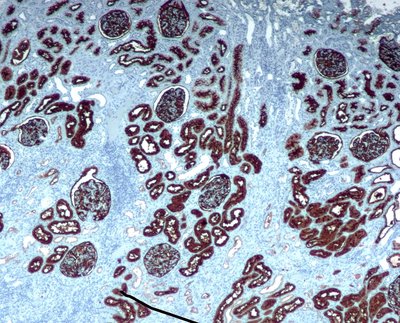
Background: Surgical resection of growth hormone (GH) secreting pituitary adenomas causing acromegaly has a low remission rate of about 53%. Determining the expression of dopamine and somatostatinreceptorson these tumours may help in predicting response to medical treatment. Objectives : The primary objective was to study the expression profile of dopamine receptor subtype2 (D2R) and, somatostatin receptor subtypes 2 and 5 (SSTR2 and SSTR5) in GH adenomas by immunohistochemistry and RT-PCR. We also intended to assess the relationship between D2R expression and response to cabergoline therapy defined by >50% reduction of GH from baseline, normalization of IGF-1 level or >50% reduction from baseline, or regression of tumour size >50%. Methods : This was aretrospective analysis of pituitary tumoursamplesof patients with acromegaly operated in CMC Vellore from February 2005 to August 2018, and who did not attain remission following surgery. Immunohistochemical staining was performed on anautostainer, and mRNA expression was quantified by real time PCR. Clinicaland biochemical dataof patients were retrieved from the computerized hospital records. Data was analysed using SPSS version 21. Results : Among 357 patients with acromegaly operated during the study period, adequate tumour samples were available in 36 cases. The mean age (±SD) of the patients was 34.2 ± 9.6 years. Before starting cabergoline therapy, the median GH level was 3.6 ng/ml (range 0.9-77.6), and median IGF-1 was 526 ng/ml (range 267-1540). The median duration of follow up was 14 (6-109) months; 16/36 patients had radiotherapy. SSTR2 immunostaining was positive in 78% (28/36) of the tumours; the median immunoreactivity score (IRS) was 2.5. SSTR5 immunostaining was positive in 39% (14/36) of the tumours, with IRS ranging from 0-12. D2 receptor immunopositivity was noted in 86% (31/36) of tumours; the median IRS was 4 (0-12). The median mRNA expression for SSTR2 was 0.542 CT (0-46), for SSTR5 was 0.12 CT (0-11.2) and D2 receptor was 15.5 CT (1.5-2418.7). Among 23 patients treated with cabergoline, 9 (39.1%) responded to cabergoline with ³50% reduction in GH and/ or IGF1. ROC curve analysis showed that amRNA expression cut-off of ³19.21 CT had a sensitivity of 87% and specificity of 77% to predict response to cabergoline therapy. D2R IRS showed no significant association with treatment response. Conclusion: D2 receptor and SSTR2 immunostaining were positive in 86% and 78% of GH adenomas respectively, while SSTR5 immunopositivity was noted in only 39%. D2 receptor mRNA profiling of GH secreting tumoursis useful to predict response to cabergoline treatment.