Comment on bg-2022-139 Article Swipe
 YOU?
·
· 2022
· Open Access
·
· DOI: https://doi.org/10.5194/bg-2022-139-rc1
· OA: W4289277960
YOU?
·
· 2022
· Open Access
·
· DOI: https://doi.org/10.5194/bg-2022-139-rc1
· OA: W4289277960
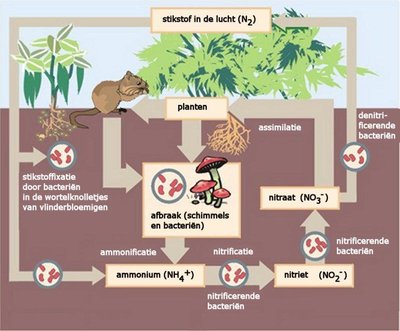
Nitrification controls the oxidation state of bioavailable nitrogen. Distinct clades of chemoautotrophic microorganisms – predominantly, ammonia-oxidizing archaea (AOA) and nitrite-oxidizing bacteria (NOB) – regulate the two steps of nitrification in the ocean, but explanations for their observed relative abundances and nitrification rates remain incomplete, and their contributions to the global marine carbon cycle via carbon fixation remain unresolved. Using a mechanistic microbial ecosystem model with nitrifying functional types, we derive simple expressions for the controls on AOA and NOB in the deep, oxygenated open ocean. The relative yields, loss rates, and cell quotas of AOA and NOB control their relative abundances, though we do not need to invoke a difference in loss rates to explain the observed relative abundances. The supply of ammonium, not the traits of AOA or NOB, controls the relatively equal ammonia- and nitrite-oxidation rates at steady state. The relative yields of AOA and NOB alone set their relative bulk carbon fixation rates in the water column. The quantitative relationships are consistent with multiple in situ datasets. In a complex global ecosystem model, nitrification emerges dynamically across diverse ocean environments, and ammonia and nitrite oxidation and their associated carbon fixation rates are decoupled due to physical transport and complex ecological interactions in some environments. Nevertheless, the simple expressions capture global patterns to first order. The model provides a mechanistically estimated upper bound on global chemoautotrophic carbon fixation of 0.2–0.5 Pg C yr-1, which is on the low end of the wide range of previous estimates. Modeled carbon fixation by NOB (about 0.1 Pg C yr-1) is substantially lower than by AOA (0.2–0.3 Pg C yr-1), predominantly reflecting the relative yields. The simple expressions derived here can be used to quantify the biogeochemical impacts of additional metabolic pathways (i.e. mixotrophy) of nitrifying clades and to identify alternative carbon-fixing metabolisms in the deep ocean.