Equitable Student Collaboration in Pair Programming Article Swipe
 YOU?
·
· 2024
· Open Access
·
· DOI: https://doi.org/10.1145/3639474.3640086
· OA: W4398776052
YOU?
·
· 2024
· Open Access
·
· DOI: https://doi.org/10.1145/3639474.3640086
· OA: W4398776052
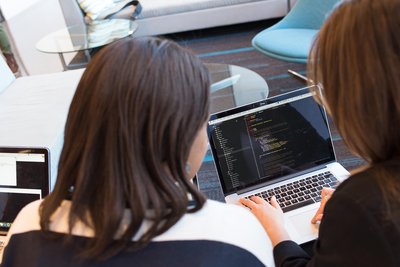
Pair programming is considered a very beneficial method for software development and is gaining increased attention in computer science education. Both partners in a programming pair should be equal and active participants, alternating on the roles of driver and navigator, but how pairs are formed in educational settings and how the resulting level of equity influences the outcomes of pair programming in classrooms remain open questions. To answer these questions, we conducted a survey involving 250 students and 100 teachers with prior pair programming experience, along with 147 students and teachers lacking such experience. We identify the currently common and preferred pair formation processes by teachers and students. We evaluate the outcomes of pair programming, as indicated by attitudes and perceived learnings, while we assess equity through behavioural patterns such as dominance, role compliance, and acknowledgment. Consequently, we investigate the relationship between outcomes and equity. Our results reveal a misalignment in pairing practices between teachers, who pair students based on diverse digital skills, and students, who express a preference for pairings aligned with similar skills. Despite this disparity, all participants think of pair programming as a method supporting equity. High acknowledgment between partners emerges as a significant factor of equity for positive attitudes and learnings, while role violations are identified as a common problem and a sign for lack of equity. These findings confirm that educators should take equity into account in pair programming classes.