Atomic-scale control of graphene magnetism by using hydrogen atoms Article Swipe
 YOU?
·
· 2016
· Open Access
·
· DOI: https://doi.org/10.1126/science.aad8038
· OA: W2337667629
YOU?
·
· 2016
· Open Access
·
· DOI: https://doi.org/10.1126/science.aad8038
· OA: W2337667629
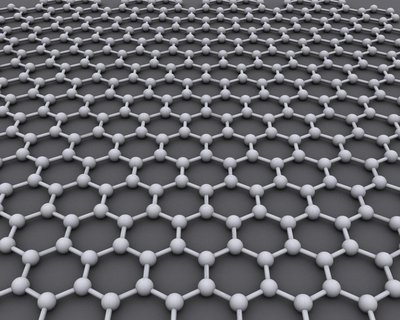
Hydrogen atom makes graphene magnetic Graphene has many extraordinary mechanical and electronic properties, but it's not magnetic. To make it so, the simplest strategy is to modify its electronic structure to create unpaired electrons. Researchers can do that by, for example, removing individual carbon atoms or adsorbing hydrogen onto graphene. This has to be done in a very controlled way because of a peculiarity of the graphene's crystal lattice, which consists of two sublattices. Gonzales-Herrero et al. deposited a single hydrogen atom on top of graphene and used scanning tunneling microscopy to detect magnetism on the sublattice lacking the deposited atom (see the Perspective by Hollen and Gupta). Science , this issue p. 437 ; see also p. 415