Flecainide ameliorates arrhythmogenicity through NCX flux in Andersen-Tawil syndrome-iPS cell-derived cardiomyocytes Article Swipe
 YOU?
·
· 2017
· Open Access
·
· DOI: https://doi.org/10.1016/j.bbrep.2017.01.002
· OA: W2579033162
YOU?
·
· 2017
· Open Access
·
· DOI: https://doi.org/10.1016/j.bbrep.2017.01.002
· OA: W2579033162
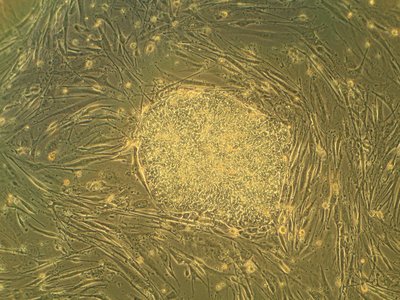
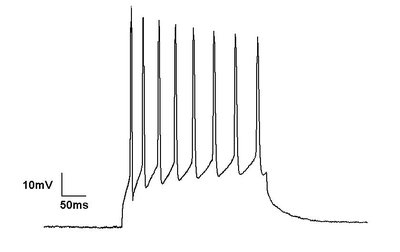
Andersen-Tawil syndrome (ATS) is a rare inherited channelopathy. The cardiac phenotype in ATS is typified by a prominent U wave and ventricular arrhythmia. An effective treatment for this disease remains to be established. We reprogrammed somatic cells from three ATS patients to generate induced pluripotent stem cells (iPSCs). Multi-electrode arrays (MEAs) were used to record extracellular electrograms of iPSC-derived cardiomyocytes, revealing strong arrhythmic events in the ATS-iPSC-derived cardiomyocytes. Ca<sup>2+</sup> imaging of cells loaded with the Ca<sup>2+</sup> indicator Fluo-4 enabled us to examine intracellular Ca<sup>2+</sup> handling properties, and we found a significantly higher incidence of irregular Ca<sup>2+</sup> release in the ATS-iPSC-derived cardiomyocytes than in control-iPSC-derived cardiomyocytes. Drug testing using ATS-iPSC-derived cardiomyocytes further revealed that antiarrhythmic agent, flecainide, but not the sodium channel blocker, pilsicainide, significantly suppressed these irregular Ca<sup>2+</sup> release and arrhythmic events, suggesting that flecainide's effect in these cardiac cells was not via sodium channels blocking. A reverse-mode Na<sup>+/</sup>Ca<sup>2+</sup>exchanger (NCX) inhibitor, KB-R7943, was also found to suppress the irregular Ca<sup>2+</sup> release, and whole-cell voltage clamping of isolated guinea-pig cardiac ventricular myocytes confirmed that flecainide could directly affect the NCX current (I<sub>NCX</sub>). ATS-iPSC-derived cardiomyocytes recapitulate abnormal electrophysiological phenotypes and flecainide suppresses the arrhythmic events through the modulation of I<sub>NCX</sub>.