Equatorial cold-water tongue in the Late Ordovician Article Swipe
 YOU?
·
· 2018
· Open Access
·
· DOI: https://doi.org/10.1130/g45302.1
· OA: W2883175906
YOU?
·
· 2018
· Open Access
·
· DOI: https://doi.org/10.1130/g45302.1
· OA: W2883175906
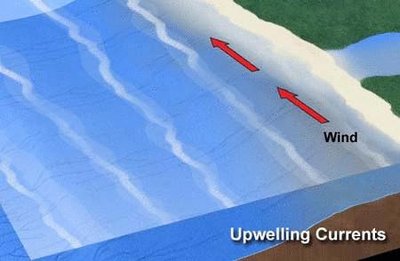
The eastern equatorial Pacific cold tongue (EEP-CT) today asserts a vital influence on ocean-atmosphere CO2 exchange and global climate patterns. Here, we report a similar equatorial cold tongue in the Late Ordovician peri-Gondwana region during drastic greenhouse-icehouse climate swings and the first mass extinction. Paleontological, sedimentological, and new stable-oxygen-isotope data from conodont apatite point to a change from warm-water to cool-water tropical depositional environments in the South China plate from Early to Late Ordovician. This apparently contradicts the current paleogeographic reconstructions of a coeval northward drift of South China from subtropical peri-Gondwana to the equator. The trend of climate cooling coincided with the origin and diversification of the Foliomena fauna in South China during the Late Ordovician, and the absence of reef-building sponges and corals. This was in sharp contrast with the Calathium calcareous sponge reefs in Early Ordovician warm-water settings. In this study, we compare the paleogeographic setting of the South China plate in the Late Ordovician with the EEP-CT today where cool-water depositional environments prevail because of cold upwelling and westerly currents.