Anticancer properties of erucin, an H2S‐releasing isothiocyanate, on human pancreatic adenocarcinoma cells (AsPC‐1) Article Swipe
 YOU?
·
· 2019
· Open Access
·
· DOI: https://doi.org/10.1002/ptr.6278
· OA: W2909963049
YOU?
·
· 2019
· Open Access
·
· DOI: https://doi.org/10.1002/ptr.6278
· OA: W2909963049
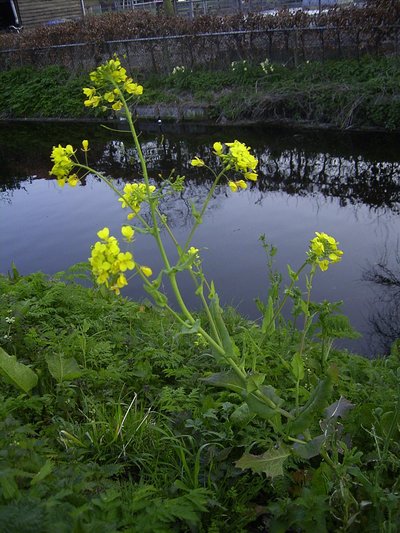
Plants of the Brassicaceae family are well‐known for containing the glucosinolate myrosinase system, which is able to release isothiocyanates after plant biotic and abiotic lesions. Erucin (ERU; 1‐isothiocyanato‐4‐(methylthio)‐butane), an isothiocyanate particularly abundant in arugula ( Eruca sativa Mill., Eruca vesicaria L., etc.), derives from the hydrolysis of the glucosinolate glucoerucin by the enzyme myrosinase. Many other natural isothiocyanates influence cancer cells and, in particular, induce antiproliferative effects at relatively high concentrations. Similar antiproliferative effects have also been shown by the newly emerging gasotransmitter hydrogen sulfide (H 2 S) and by H 2 S‐releasing compounds. In a previous study, our group demonstrated that isothiocyanates release H 2 S in biological environments. In this work, we demonstrated the H 2 S‐donor properties of ERU in pancreatic adenocarcinoma cells (AsPC‐1) and delineated its profile as a chemopreventive or anticancer agent. Indeed, ERU showed significant antiproliferative effects: ERU inhibited AsPC‐1 cell viability at relatively high concentrations (30–100 μM). Moreover, ERU inhibited cell migration, altered the AsPC‐1 cell cycle, and exhibited proapoptotic effects. Finally, ERU inhibited ERK1/2 phosphorylation. This mechanism is particularly important in AsPC‐1 cells because they are characterized by a mutation in KRAS that determines KRAS hyperactivation followed by MAP‐kinase hyperphosphorylation, which plays a pivotal role in pancreatic cancer proliferation, growth, and survival.