Mean-field tricritical polymers Article Swipe
 YOU?
·
· 2020
· Open Access
·
· DOI: https://doi.org/10.2140/pmp.2020.1.167
· OA: W2984258057
YOU?
·
· 2020
· Open Access
·
· DOI: https://doi.org/10.2140/pmp.2020.1.167
· OA: W2984258057
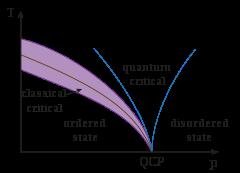
We provide an introductory account of a tricritical phase diagram, in the\nsetting of a mean-field random walk model of a polymer density transition, and\nclarify the nature of the density transition in this context. We consider a\ncontinuous-time random walk model on the complete graph, in the limit as the\nnumber of vertices $N$ in the graph grows to infinity. The walk has a repulsive\nself-interaction, as well as a competing attractive self-interaction whose\nstrength is controlled by a parameter $g$. A chemical potential $\\nu$ controls\nthe walk length. We determine the phase diagram in the $(g,\\nu)$ plane, as a\nmodel of a density transition for a single linear polymer chain. A dilute phase\n(walk of bounded length) is separated from a dense phase (walk of length of\norder $N$) by a phase boundary curve. The phase boundary is divided into two\nparts, corresponding to first-order and second-order phase transitions, with\nthe division occurring at a tricritical point. The proof uses a supersymmetric\nrepresentation for the random walk model, followed by a single block-spin\nrenormalisation group step to reduce the problem to a 1-dimensional integral,\nfollowed by application of the Laplace method for an integral with a large\nparameter.\n