Peter Brown—An appreciation Article Swipe
 YOU?
·
· 2021
· Open Access
·
· DOI: https://doi.org/10.1111/ajr.12831
· OA: W4200553835
YOU?
·
· 2021
· Open Access
·
· DOI: https://doi.org/10.1111/ajr.12831
· OA: W4200553835
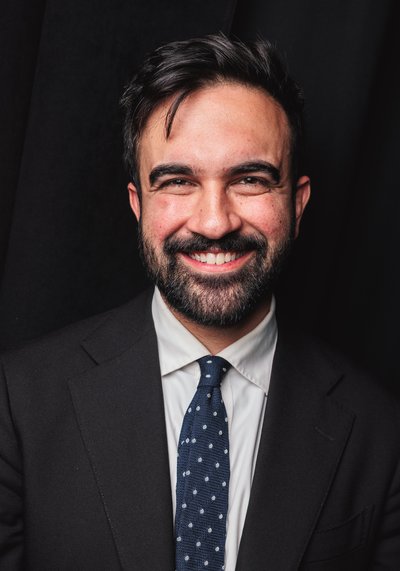
After 15 years as AJRH Manager for the National Rural Health Alliance (NRHA), Peter Brown has left for new professional challenges. That is a long five-set match by anyone's measure. This piece is to thank Peter for his great service—not just to AJRH but to the NRHA in total—now that ‘Game, Set and Match’ has been intoned. The most important fact to confirm in this piece is that in everything he did with and for the NRHA and AJRH, Peter was respected, patient, thorough and obliging. He was a generous colleague who became a friend to all who got to know him through his work. In 2006, Peter transferred from Services for Rural and Remote Allied Health (SARRAH) to become a valued member of the NRHA team. As the NRHA's Manager for AJRH, the entity with which he was dealing was Wiley-Blackwell. He was very good at all aspects of the work involved in that—although he always said that the professionalism and good humour displayed by the staff at Wiley-Blackwell with whom he worked made the challenge a relatively comfortable one. Prior to working at the NRHA, Peter was a Commonwealth public servant. With the Australia Council, he ended up as Director of the Aboriginal Arts Unit, in which position he oversaw creation of the conditions for the return of its affairs to Aboriginal management. Years later, he was to lead the NRHA's development of a Reconciliation Action Plan. He joined the Department of Foreign Affairs and Trade and for five years served as Counsellor (Arts and Cultural Exchange) at the Australian Embassy in Beijing. In this position, Peter organised major Australian cultural events such as ballet, orchestral performances and film showings in China and analysed cultural and social developments in the country. His work supported networks and partnerships between Australia and China in arts, culture and creative industries, some of which are still significant to this day. Back in Australia with Jane Brown, his pearl, Peter worked with the National Council for the Centenary of Federation. These high level experiences were part of what made Peter such a calm and thoughtful colleague at the NRHA and an effective Manager of AJRH. He provided the staff team with a good ear, careful consideration and a valuable opinion on even the most complex issues. The mainstay of his work with the NRHA was as Manager of AJRH, the Alliance’s flagship publication. On one occasion, he branded AJRH ‘the jewel in the Alliance's crown’. As AJRH Manager, Peter was responsible for the business (including budget) and meetings of the Board of Management, on which Wiley-Blackwell had representation. He also supported the Editor, kept the NRHA's Council and CEO informed about AJRH as necessary and provided administrative support to its International Advisory Board. He looked after the contract between Wiley-Blackwell and the NRHA and also played a part with the Editor and Advisory Committee in managing journal content. An important part of the job was to support those member bodies of the NRHA which were Journal Associates. This meant that Peter had special relationships with AARN, SARRAH, CRANA, ACRRM, the Rural Faculty of RCNMA and RDAA. He became involved in developments in the scientific journal publishing sector which had relevance to AJRH, such as Thomson ISI listing, the Excellence in Research Australia (ERA) Fields of Research database, free and early access and digitisation. His relationship with the parties involved in this portfolio of activity was always warm, polite and detailed. Peter was soon responsible for more than just AJRH. He became, by default, manager of the NRHA's arts and health activities—no doubt a doddle after the artistic events organised out of Beijing. These NRHA activities peaked every second year in the arts and health stream at the National Rural Health Conferences. The NRHA was pleased and proud to run successful arts and health activities at its biennial conferences. Peter was the one who liaised with the arts practitioners and functionaries in whichever jurisdiction and city were hosting the conference, and brought a diverse program to a successful conclusion. The NRHA's support for arts in health work reached its apotheosis in work with Regional Arts Australia and others to establish a national arts and health forum. This involved liaison with state, territory and commonwealth departments and some of their Ministers. There was also the production of Seeded, a good-looking book of successful arts and health case studies. It was a source of regret that the whole-of-government approach to health, well-being and the arts which characterised this work did not become entrenched. It was seeded, one might say, but found the climate somewhat inhospitable. Another matter that fell Peter's way was the writing for publication workshop held in conjunction with the biennial conference. Peter managed this project with his typical eye for detail and positive communications. Peter Brown has provided great support for AJRH for a considerable period. We thank him and acknowledge his wonderful way of working and his diplomacy when working with editors, reviewers and authors. His stewardship across the tenure of the three Editors in Chief has made a significant contribution to position of AJRH today, as one of the world’s most respect rural health journals. As former Chief Executive and Editors in Chief, we wish to acknowledge and thank him for this wisdom, diplomacy and collegiality. Peter finished at the NRHA in 2021, and we wish him well with the things to which he has now turned his attention.