Negative affective traits moderate tDCS effects on memory Article Swipe
 YOU?
·
· 2025
· Open Access
·
· DOI: https://doi.org/10.1101/2025.08.15.670509
YOU?
·
· 2025
· Open Access
·
· DOI: https://doi.org/10.1101/2025.08.15.670509
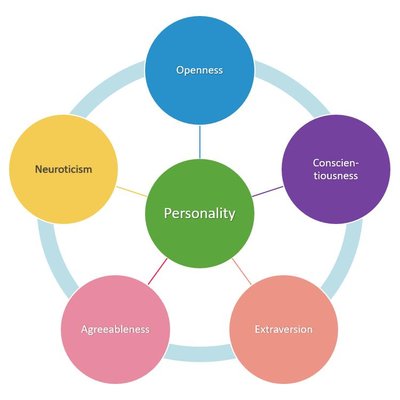
Background The cognitive effects of transcranial direct current stimulation (tDCS) show substantial inter-individual variability, emphasizing the need to identify moderators of responsiveness, with negative affectivity as a potential factor influencing both cognitive performance and tDCS outcomes. Here we examine if and how negative affectivity (depressiveness, anxiety, and stress level), conceptualized as both transient states and stable traits, moderates the effects of tDCS on working memory (WM) and associative memory (AM). Methods We pooled data from six sham-controlled experiments involving 144 healthy young adults (351 tDCS sessions) using within-subject crossover designs. Participants completed WM and AM tasks following active anodal tDCS or sham, as well as Depression, Anxiety, and Stress Scale (DASS-21) before each session. Results Trait-level, but not state-level, negative affectivity moderated WM. Individuals with higher levels of depression, anxiety, or stress demonstrated greater tDCS-induced WM gains. tDCS-induced AM benefits were consistent and unaffected by affective traits or states. Conclusion Negative affectivity may shape individual susceptibility to tDCS, increasing the potential for stimulation-induced improvement on tasks requiring significant executive control.
Related Topics To Compare & Contrast


- Type
- preprint
- Language
- en
- Landing Page
- https://doi.org/10.1101/2025.08.15.670509
- https://www.biorxiv.org/content/biorxiv/early/2025/08/21/2025.08.15.670509.full.pdf
- OA Status
- green
- References
- 68
- Related Works
- 10
- OpenAlex ID
- https://openalex.org/W4413391101