A brainstem integrator for self-location memory and positional homeostasis in zebrafish Article Swipe
 YOU?
·
· 2022
· Open Access
·
· DOI: https://doi.org/10.1016/j.cell.2022.11.022
YOU?
·
· 2022
· Open Access
·
· DOI: https://doi.org/10.1016/j.cell.2022.11.022
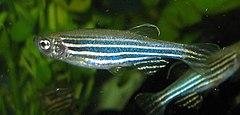
To track and control self-location, animals integrate their movements through space. Representations of self-location are observed in the mammalian hippocampal formation, but it is unknown if positional representations exist in more ancient brain regions, how they arise from integrated self-motion, and by what pathways they control locomotion. Here, in a head-fixed, fictive-swimming, virtual-reality preparation, we exposed larval zebrafish to a variety of involuntary displacements. They tracked these displacements and, many seconds later, moved toward their earlier location through corrective swimming ("positional homeostasis"). Whole-brain functional imaging revealed a network in the medulla that stores a memory of location and induces an error signal in the inferior olive to drive future corrective swimming. Optogenetically manipulating medullary integrator cells evoked displacement-memory behavior. Ablating them, or downstream olivary neurons, abolished displacement corrections. These results reveal a multiregional hindbrain circuit in vertebrates that integrates self-motion and stores self-location to control locomotor behavior.
Related Topics To Compare & Contrast


- Type
- article
- Language
- en
- Landing Page
- https://doi.org/10.1016/j.cell.2022.11.022
- http://www.cell.com/article/S0092867422014660/pdf
- OA Status
- hybrid
- Cited By
- 50
- References
- 137
- Related Works
- 10
- OpenAlex ID
- https://openalex.org/W4312210215