Within- and across-frequency temporal processing and speech perception in cochlear implant users Article Swipe
 YOU?
·
· 2022
· Open Access
·
· DOI: https://doi.org/10.1371/journal.pone.0275772
YOU?
·
· 2022
· Open Access
·
· DOI: https://doi.org/10.1371/journal.pone.0275772
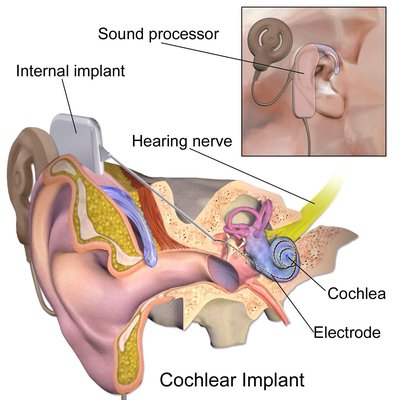
Objective Cochlear implant (CI) recipient’s speech perception performance is highly variable and is influenced by temporal processing abilities. Temporal processing is commonly assessed using a behavioral task that requires the participant to detect a silent gap with the pre- and post-gap stimuli of the same frequency (within-frequency gap detection) or of different frequencies (across-frequency gap detection). The purpose of the study was to evaluate behavioral and electrophysiological measures of within- and across-frequency temporal processing and their correlations with speech perception performance in CI users. Design Participants included 11 post-lingually deafened adult CI users (n = 15 ears; Mean Age = 50.2 yrs) and 11 age- and gender-matched normal hearing (NH) individuals (n = 15 ears; Mean Age = 49.0 yrs). Speech perception was assessed with Consonant-Nucleus-Consonant Word Recognition (CNC), Arizona Biomedical Sentence Recognition (AzBio), and Bamford-Kowal-Bench Speech-in-Noise Test (BKB-SIN) tests. Within- and across-frequency behavioral gap detection thresholds (referred to as the GDT within and GDT across ) were measured using an adaptive, two-alternative, forced-choice procedure. Cortical auditory evoked potentials (CAEPs) were elicited using within- and across-frequency gap stimuli under four gap duration conditions (no gap, GDT, sub-threshold GDT, and supra-threshold GDT). Correlations among speech perception, GDTs, and CAEPs were examined. Results CI users had poorer speech perception scores compared to NH listeners ( p < 0.05), but the GDTs were not different between groups ( p > 0.05). Compared to NH peers, CI users showed increased N1 latency in the CAEPs evoked by the across-frequency gap stimuli ( p < 0.05). No group difference was observed for the CAEPs evoked by the within-frequency gap ( p > 0.05). Three CI ears showing the longest GDT within also showed the poorest performance in speech in noise. The within-frequency CAEP increased in amplitude with the increase of gap duration; while the across-frequency CAEP displayed a similar amplitude for all gap durations. There was a significant correlation between speech scores and within-frequency CAEP measures for the supra-threshold GDT condition, with CI users with poorer speech performance having a smaller N1-P2 amplitude and longer N1 latency. No correlations were found among GDT across , speech perception, and across-frequency CAEP measures. Conclusions Within- and across-frequency gap detection may involve different neural mechanisms. The within-frequency gap detection task can help identify CI users with poor speech performance for rehabilitation. The within-frequency CAEP is a better predictor for speech perception performance than the across-frequency CAEP.
Related Topics To Compare & Contrast


- Type
- article
- Language
- en
- Landing Page
- https://doi.org/10.1371/journal.pone.0275772
- OA Status
- gold
- Cited By
- 4
- References
- 80
- Related Works
- 10
- OpenAlex ID
- https://openalex.org/W4305057147