Holographic-Type Behaviors in Complex Systems Dynamics from a Multifractal Perspective of Motion Article Swipe
 YOU?
·
· 2025
· Open Access
·
· DOI: https://doi.org/10.5772/intechopen.1009339
· OA: W4407770636
YOU?
·
· 2025
· Open Access
·
· DOI: https://doi.org/10.5772/intechopen.1009339
· OA: W4407770636
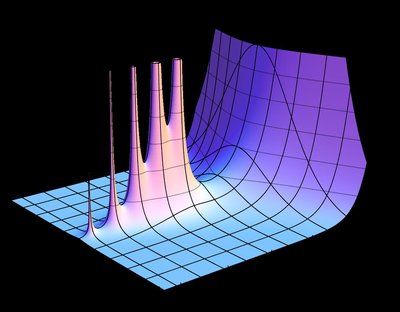
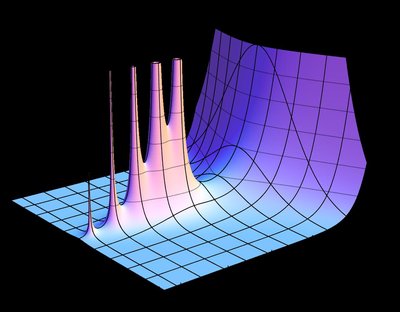
A unitary model of complex systems dynamics is proposed, assuming that these systems can be assimilated to a multifractal mathematical object. Then, if we describe these dynamics in the framework of The Scale Relativity Theory, through continuous and non-differentiable curves (fractal or multifractal curves), possible holographic-type behaviors can be obtained. In this context, the Schrödinger and Madelung multifractal scenarios align through the generation of patterns, symmetries of the normalized velocity relative to the symmetry axis of the spatial-temporal Gaussian, and vertices at the periphery of the pattern for the normalized velocity field (Taylor-type effect). In conclusion, we propose a unitary model for describing complex systems dynamics, on both monofractal and multifractal manifolds.
Related Topics To Compare & Contrast