

Description
Anaxagoras (; Greek: Ἀναξαγόρας, Anaxagóras , "lord of the assembly"; c. 500 – c. 428 BC) was a Pre-Socratic Greek philosopher. Born in Clazomenae at a time when Asia Minor was under the control of the Persian Empire, Anaxagoras came to Athens. According to Diogenes Laërtius and Plutarch, in later life he was charged with impiety and went into exile in Lampsacus; the charges may have been political, owing to his association with Pericles, if they were not fabricated by later ancient biographers.
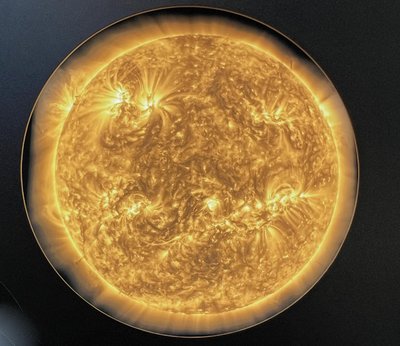
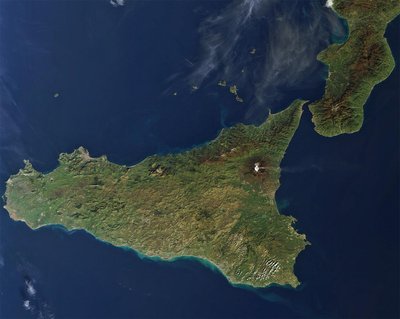
Responding to the claims of Parmenides on the impossibility of change, Anaxagoras introduced the concept of Nous (Cosmic Mind) as an ordering force. He also gave several novel scientific accounts of natural phenomena, including the notion of panspermia, that life exists throughout the universe and could be distributed everywhere. He deduced a correct explanation for eclipses and described the Sun as a fiery mass larger than the Peloponnese, as well as attempting to explain rainbows and meteors.
*[c.]: circa