

Description
During the historical timeline of the Southern United States, the Antebellum Period (from Latin: ante bellum , lit. 'before the war') extended from the conclusion of the War of 1812 to the start of the American Civil War in 1861. This era in the South's history was marked by the prevalent practice of slavery and the associated societal norms it cultivated. Over the course of this period, Southern leaders underwent a transformation in their perspective on slavery. Initially regarded as an awkward and temporary institution, it gradually evolved into a defended concept, with proponents arguing for its positive merits, while simultaneously vehemently opposing the burgeoning abolitionist movement.
The economy was largely plantation based, and dependent on exports. Society was stratified, inegalitarian, and perceived by immigrants as lacking in opportunities. Consequently, the manufacturing base lagged behind the non- slave states. Wealth inequality grew as the larger landholders took the greater share of the profits generated by slaves, which also helped to entrench their power as a political class.
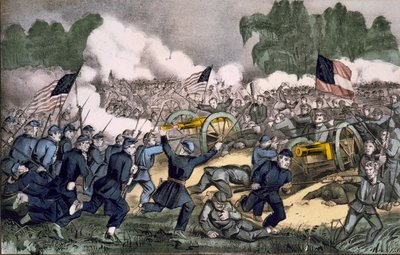
As the country expanded westward, slavery's propagation became a major issue in national politics, eventually boiling over into the Civil War. In the years that followed, this period was romanticized by historical revisionists to protect three central assertions: that the Confederate cause was heroic, that enslaved people were happy and satisfied, and that slavery was not the primary cause of the war. This phenomenon has continued to influence racism, gender roles, and religious attitudes in the South, and to a lesser extent the rest of the country, to the present day.
Antebellum South News
Tags
Collections
No collections available for this topic.