

Description
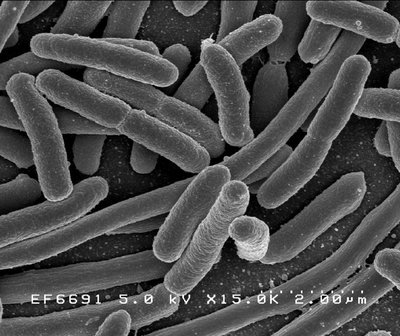
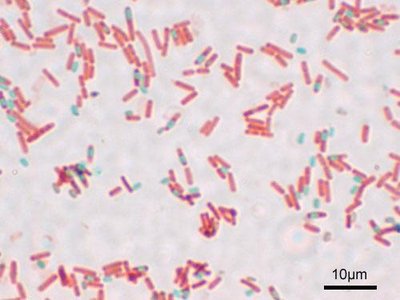
Bacillus megaterium is a rod-like, Gram-positive, mainly aerobic, spore forming bacterium found in widely diverse habitats. It has a cell length up to 4 µm and a diameter of 1.5 µm, which is quite large for bacteria. The cells often occur in pairs and chains, where the cells are joined together by polysaccharides on the cell walls.
In the 1960s, prior to the use of Bacillus subtilis for this purpose, B. megaterium was the main model organism among Gram-positive bacteria for intensive studies on biochemistry, sporulation, and bacteriophages. Recently, its popularity has started increasing in the field of biotechnology for its recombinant protein-production capacity.
This species has been recently been proposed to be transferred into the genus Priestia. The correct nomenclature would then be Priestia megaterium.