 Beta-Carotene
Swipe Beta-Carotene Vs...
Beta-Carotene
Swipe Beta-Carotene Vs...


Beta-Carotene News
Description
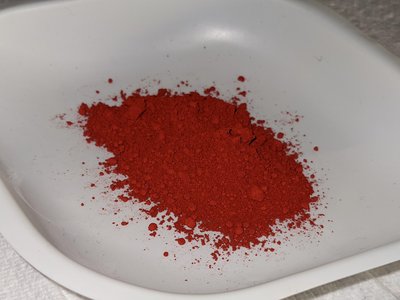
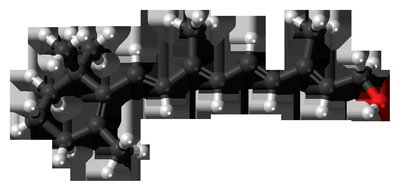
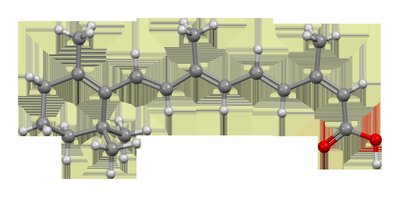
β-Carotene ( beta -carotene) is an organic, strongly coloured red-orange pigment abundant in fungi, plants, and fruits. It is a member of the carotenes, which are terpenoids (isoprenoids), synthesized biochemically from eight isoprene units and thus having 40 carbons. Among the carotenes, β-carotene is distinguished by having beta-rings at both ends of the molecule. β-Carotene is biosynthesized from geranylgeranyl pyrophosphate.
In some Mucoralean fungi, β-carotene is a precursor to the synthesis of trisporic acid.
β-carotene is the most common form of carotene in plants. When used as a food coloring, it has the E number E160a.: 119 The structure was deduced by Karrer et al. in 1930. In nature, β-carotene is a precursor (inactive form) to vitamin A via the action of beta-carotene 15,15'-monooxygenase.
Isolation of β-carotene from fruits abundant in carotenoids is commonly done using column chromatography. It can also be extracted from the beta-carotene rich algae, Dunaliella salina. The separation of β-carotene from the mixture of other carotenoids is based on the polarity of a compound. β-Carotene is a non-polar compound, so it is separated with a non-polar solvent such as hexane. Being highly conjugated, it is deeply colored, and as a hydrocarbon lacking functional groups, it is very lipophilic.
Related
More






Details
- Slug: beta-carotene
- Added: Jul 20, 2024