
Description
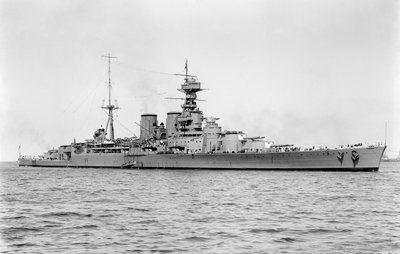
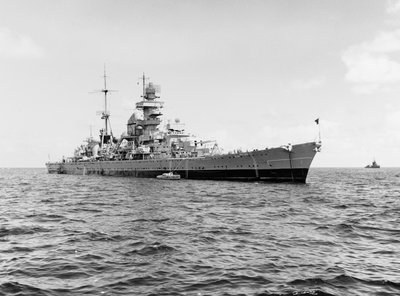
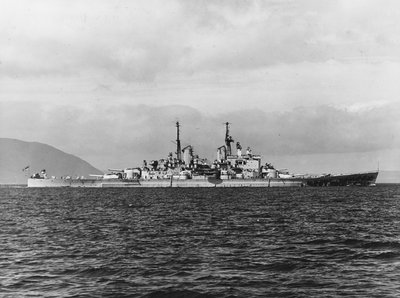
The County class was a class of heavy cruisers built for the Royal Navy in the years between the First and Second World Wars. They were the first post- war cruisers constructed for the Royal Navy and were designed within the limits of the Washington Naval Treaty of 1922. Such ships, with a limit of 10,000 tons, standard displacement and 8-inch calibre main guns may be referred to as "treaty cruisers" (the term "heavy cruiser" was not defined until the London Naval Treaty of 1930).
The thirteen Counties were built in the Kent , London and Norfolk sub- classes. They were the only 10,000-ton 8-inch gun, or "A", cruisers that the Royal Navy built. The Counties are remembered for their distinctive three- funnel layout and service in all the major naval theatres of the Second World War.
To extract more ships from the treaty limits, the navy planned to construct 8,250-ton "B" ships, six of which could be built in place of five Counties. The extra ship that this afforded was an attractive proposition for a navy that had the immense peacetime commitments of empire. Peacetime economies and politics intervened and only two B-type cruisers were built, an 8-inch gun modified County design: the York class.
In 1929, the mean cost of each "A" ship was estimated to be £2,180,000, whilst the mean cost of each "B" ship was estimated to be £1,800,000.