
Description
The Dido class consisted of sixteen light cruisers built for the Royal Navy during World War II. The first group of three ships were commissioned in 1940; the second group (six ships) and third group (two ships) were commissioned between 1941 and 1942. A fourth group, also described as the Improved Dido , or the Bellona class (five ships), were commissioned between 1943 and 1944. Most members of the class were given names drawn from classical history and legend. The groups differed in armament and for the Bellona s, in function. The Dido class were designed as small trade protection cruisers with a secondary role with the fleet providing leaders for the destroyer screen. The Didos were designed for five turrets, with twin 5.25" high angle gun turret mountings, complex modern warships and turrets, offering shell loading, -05 to 90 degree elevation to give a dual-purpose capacity with centreline turrets with potential AA possible. The new complex turrets were unreliable when introduced and somewhat unsatisfactory, at a time the UK faced a military fight for survival. During the war the original 1939-42 Didos class required very extensive increased electric generating capacity for additional radar and RPM with electrification of turret hydraulics and in the final Bellona, HMS Diadem electric turrets While some damage was experienced initially in extreme North Atlantic conditions, modified handling avoided the problem. The fitting of the three turrets forward in A, B and C positions depended on some use of aluminium in the structure and the lack of aluminium after Dunkirk was one of the reasons for only four turrets being fitted to the first group of three, while the third group had four turrets with twin 4.5" guns. The Bellona 's were designed from the start with four turrets with radar-aimed guns and greater light anti- aircraft armament.
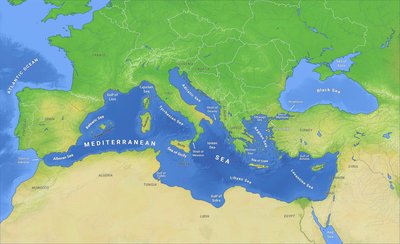
From the initial trials of the lead ship of the class, Bonaventure , the new light cruisers were considered a significant advance and later, in action in the Mediterranean Sea, they were surprisingly effective in protecting convoys to Malta and saw off far larger ships of the Italian Royal Navy. The 5.25-inch (133 mm) gun was primarily a surface weapon but designed to fire the heaviest shell suitable for manual loading for anti-aircraft defence and accounted for around 23 aircraft and deterred far more. The Dido and Bellona class were always dogged by roller path difficulties on the rail track the outer shell of the turrets turned. The roller path problem putting turrets putting turrets out of action from the initial trials till the last RN operational service of Euralysis and Cleopatra with the RN in 1953-4 and was the bane of the 3 Bellona run postwar by the RNZN The original Dido -class ships HMS Bonaventure , HMS Charybdis , HMS Hermione and HMS Naiad were lost in the war. The original ship of the class, HMS Dido , was put into reserve in 1947 and decommissioned ten years later. HMS Euryalus was the last remaining in-service ship of the original class, being decommissioned in 1954 and scrapped in 1959.
The Bellona class (as well as four rebuilt Dido ships) were mainly intended as picket ships for amphibious warfare operations, in support of aircraft carriers of the Royal Navy and United States Navy in the Pacific. HMS Spartan was the only ship of the sub-class to be sunk, struck by a German Fritz X glide bomb while supporting the landings at Anzio. Two ships were to be modified to be command ships of aircraft carrier and cruiser groups intended for action against German battlecruisers. Originally these were Scylla and Charybdis of the third group but after the loss of Charybdis in 1943, Royalist of the fourth ( Bellona ) group was selected; these were also known as the Modified Dido.
Post-war modernisation proposals were limited by the tight war emergency design which offered inadequate space and weight for the fire control and magazines for four or five 3-inch twin 70 turrets combined with the fact the heavy 5.25-inch shells fitted when the cruisers were built had a large burst shock which made them a more effective high level AA weapon than post war RN 4.5-inch guns. HMS Royalist was rebuilt for potential action alongside the battleship HMS Vanguard against the post-war Soviet Sverdlov -class cruisers and Stalingrad -class battlecruisers. Royalist was loaned to the Royal New Zealand Navy (RNZN) from 1956 to 1966.