
Description
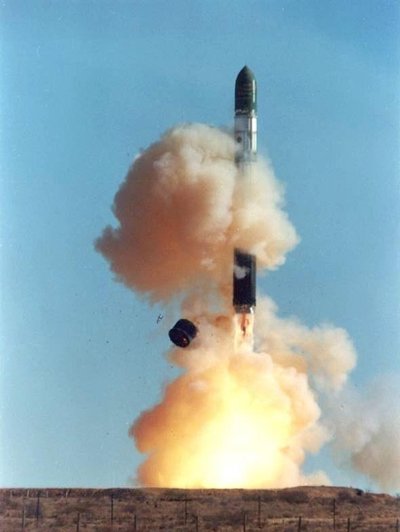
Energia (Russian: Энергия, romanized: Energiya , lit. 'Energy'; GRAU 11K25) was a 1980s super-heavy lift launch vehicle. It was designed by NPO Energia of the Soviet Union as part of the Buran program for a variety of payloads including the Buran spacecraft. Control system main developer enterprise was the Khartron NPO "Electropribor". The Energia used four strap- on boosters each powered by a four-chamber RD-170 engine burning kerosene/LOX, and a central core stage with four single-chamber RD-0120 (11D122) engines fueled by liquid hydrogen/LOX.
The launch vehicle had two functionally different operational variants: Energia-Polyus, the initial test configuration, in which the Polyus system was used as a final stage intended to put the payload into orbit, and Energia- Buran, in which the Buran orbiter was the payload and the source of the orbit insertion impulse.
The launch vehicle had the capacity to place about 100 tonnes in Low Earth orbit, up to 20 tonnes to geostationary orbit and up to 32 tonnes by translunar trajectory into lunar orbit.
The launch vehicle made just two flights before being discontinued. Since 2016, there have been attempts to revive the launch vehicle, reusing an updated version of its booster engine in the Soyuz-5 rocket.
Energia (Rocket) News
Collections
No collections available for this topic.