 Higher-Order Function
Swipe Higher-Order Function Vs...
Higher-Order Function
Swipe Higher-Order Function Vs...




Higher-Order Function News
Description
In mathematics and computer science, a higher-order function ( HOF ) is a function that does at least one of the following:
- takes one or more functions as arguments (i.e. a procedural parameter, which is a parameter of a procedure that is itself a procedure),
- returns a function as its result.
All other functions are first-order functions. In mathematics higher-order functions are also termed operators or functionals. The differential operator in calculus is a common example, since it maps a function to its derivative, also a function. Higher-order functions should not be confused with other uses of the word "functor" throughout mathematics, see Functor (disambiguation).
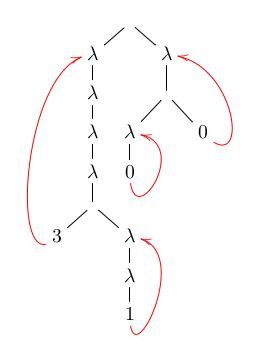
In the untyped lambda calculus, all functions are higher-order; in a typed lambda calculus, from which most functional programming languages are derived, higher-order functions that take one function as argument are values with types of the form ( τ 1 → τ 2 ) → τ 3 {\displaystyle (\tau {1}\to \tau {2})\to \tau _{3}} .
Related
More











Collections
No collections available for this topic.
Details
- Slug: higher-order-function
- Added: Jul 20, 2024