
Description
The Holden Commodore is a full-size car that was sold by Holden from 1978 to 2020. It was manufactured from 1978 to 2017 in Australia and from 1979 to 1990 in New Zealand, with production of the locally manufactured versions in Australia ending on 20 October 2017.
The first three generations of Holden produced Commodores (1978–2006) were based on the Opel designed V-body rear-wheel drive automotive platform, which was the basis of GM's largest European models, but were structurally strengthened, mechanically modified, and, in time, enlarged by Holden for Australian road conditions, production needs, and market demands. The styling of these cars was generally similar to that of the Opel Commodore C, and later, the Opel Omega A/B. The fourth generation Holden Commodore models VE and VF, manufactured by Holden from 2006 until 2017, were entirely designed in-house and based on the Holden-developed, rear-wheel drive Zeta platform.
Between 2018 and 2020, a rebadged, front-wheel drive Opel Insignia, built by Opel in Germany, was sold in Australia as the Holden Commodore (ZB). All sales of the last Commodore ended at the end of 2020, coinciding with the complete discontinuation of Holden as a subsidiary company, marque, and nameplate.
The Commodore replaced the long-serving Holden Kingswood and Holden Premier. Initially introduced as a single sedan body style, the range expanded in 1979 to include a station wagon. From 1984, Holden began branding the flagship model as Holden Calais , with the Commodore Berlina introduced in 1984 gaining independent Holden Berlina nomenclature in 1988. Long-wheelbase Statesman/Caprice derivatives and Commodore utility body variants followed in 1990. The third generation architecture spawned the most body styles, with a new Holden utility launched in 2000 (known officially as the Holden Ute ), reborn Monaro coupé in 2001, four-door Holden Crewman utility and all- wheel drive (AWD) Holden Adventra crossover in 2003. Holden Special Vehicles (HSV) in 1987 began official modification of high performance variants of the Commodore and its derivatives, under its own nameplate.
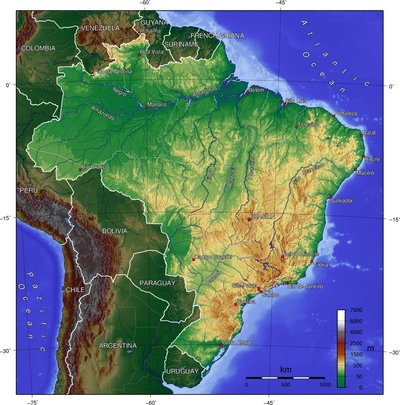
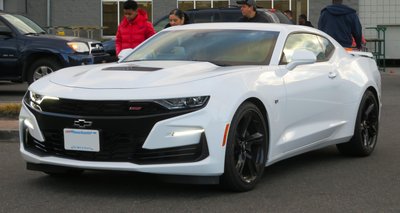
Rivalry came predominantly from the Ford Falcon—also locally built. Prior to the second generation Commodore of 1988, the Holden was positioned a full class below the full-size Falcon. To varying degrees, competition also came from mid-size offerings from Toyota Australia as well as Chrysler Australia, which morphed into Mitsubishi Motors Australia. Moreover, between 1989 and 1997, Australian federal government policy saw the launch of the Toyota Lexcen , which was a rebadged version of the second generation Commodore. With the introduction of the third generation in 1997, Holden implemented its largest export programs involving Commodore and its derivatives. In the Middle East, South Africa and Brazil, the Commodore sold as a Chevrolet. High- performance export versions followed in North America, sold as Pontiac and later Chevrolet. HSV also exported to the United Kingdom as Vauxhall, in the Middle East as Chevrolet Special Vehicles (CSV) and in New Zealand and Singapore as HSV.
In December 2013, Holden announced that it would cease its local production by the end of October 2017 committing, however, to use the long-standing Commodore nameplate on its fifth-generation fully imported replacement, moving to a front-wheel drive (FWD)/all-wheel drive (AWD) platform.
On 10 December 2019, Holden announced that the Commodore nameplate would be discontinued in 2020, in what is, according to Holden's interim chairman and managing director Kristian Aquilina, "decisive action to ensure a sharp focus on the largest and most buoyant market segments", focusing on their SUV and Ute range, which had accounted for over 76% of their lineup during 2019. This marks the end of the Commodore nameplates' 41 years." On 17 February 2020, General Motors announced that the Holden marque in its entirety would be retired from sale in Australia and New Zealand by 2021.