 Jewish Exodus From The Muslim World
Swipe Jewish Exodus From The Muslim World Vs...
Jewish Exodus From The Muslim World
Swipe Jewish Exodus From The Muslim World Vs...




Jewish Exodus From The Muslim World News
Description
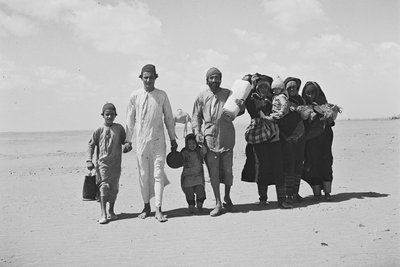
The Jewish exodus from the Muslim world was the migration, departure, flight and expulsion of around 900,000 Jews from Muslim-majority countries in West Asia, North Africa and, to a lesser extent, Central Asia, South Asia and Southeast Asia in the 20th century. Predominantly in response to the creation of Israel, the exodus mainly transpired from 1948 to the early 1970s, with one final exodus from Iran in 1979–80 following the Iranian Revolution. An estimated 650,000 of the departees settled in Israel.
A number of small-scale Jewish migrations began in many Middle Eastern countries early in the 20th century with the only substantial aliyah (immigration to the area today known as Israel) coming from Yemen and Syria. Few Jews from Muslim countries immigrated during the period of Mandatory Palestine. Prior to the Israeli Declaration of Independence in 1948, approximately 800,000 Jews were living in lands that now make up the Arab world. Of these, just under two-thirds lived in French- and Italian-controlled North Africa, 15–20% in the Kingdom of Iraq, approximately 10% in the Kingdom of Egypt and approximately 7% in the Kingdom of Yemen. A further 200,000 lived in Pahlavi Iran and the Republic of Turkey.
The first large-scale exoduses took place in the late 1940s and early 1950s, primarily from Iraq, Yemen and Libya. In these cases over 90% of the Jewish population left, despite the necessity of leaving their property behind. Between 1948 and 1951, 260,000 Jews immigrated to Israel from Arab countries. The Israeli government's policy to accommodate 600,000 immigrants over four years, doubling the existing Jewish population, encountered mixed reactions in the Knesset; there were those within the Jewish Agency and government who opposed promoting a large-scale emigration movement among Jews whose lives were not in danger.
Later waves peaked at different times in different regions over the subsequent decades. The peak of the exodus from Egypt occurred in 1956 following the Suez Crisis. The emigrations from the other North African Arab countries peaked in the 1960s. Lebanon was the only Arab country to see a temporary increase in its Jewish population during this period, due to an influx of Jews from other Arab countries, although by the mid-1970s the Jewish community of Lebanon had also dwindled. Six hundred thousand Jews from Arab and Muslim countries had reached Israel by 1972, while 300,000 migrated to France and the United States. In Israel, the descendants of the Jewish immigrants from the region, known locally as Mizrahi Jews ("Oriental"; lit. 'Eastern Jews') and Sephardic Jews ("Spanish Jews"), constitute more than half of the total population of Israel, partially as a result of their higher fertility rate. In 2009, only 26,000 Jews remained in Arab countries and Iran, as well as 26,000 in Turkey. By 2019, the total number of Jews in Arab countries and Iran had declined to 12,700, and in Turkey to 14,800.
The reasons for the exoduses are manifold, including pull factors, such as the desire to fulfill Zionist yearnings or find a better economic status and a secure home in Europe or the Americas and, in Israel, a policy change in favour of mass immigration focused on Jews from Arab and Muslim countries, together with push factors, such as pogroms, persecution, antisemitism, political instability, poverty and expulsion. The history of the exodus has been politicized, given its proposed relevance to the historical narrative of the Arab–Israeli conflict. When presenting the history, those who view the Jewish exodus as analogous to the 1948 Palestinian expulsion and flight generally emphasize the push factors and consider those who left as refugees, while those who do not, emphasize the pull factors and consider them willing immigrants.
*[lit.]: literal translation
Related
More




















Collections
Details
- Slug: jewish-exodus-from-the-muslim-world
- Total Views: 769
- Added: Jul 20, 2024