
Description
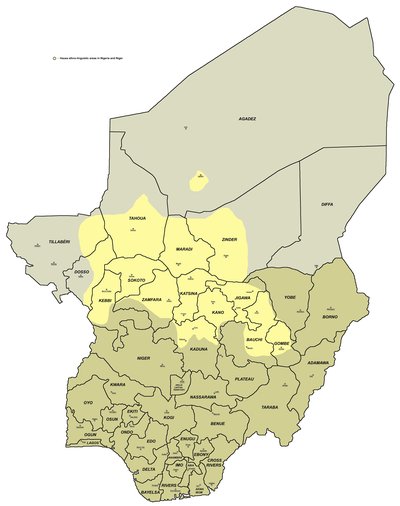
Kaduna is the capital city of Kaduna State, and the former political capital of Northern Nigeria. It is located in north-western Nigeria, on the Kaduna River. It is a trade center and a major transportation hub as the gateway to northern states of Nigeria, with its rail and important road network.
The population of Kaduna was at 760,084 as of the 2006 Nigerian census. Rapid urbanization since 2005 has created an increasingly large population, as at 2023, the estimated population is 1.1 million. The project population of people in Kaduna state as at 2021 is 8.9 million people.
** Climate.**
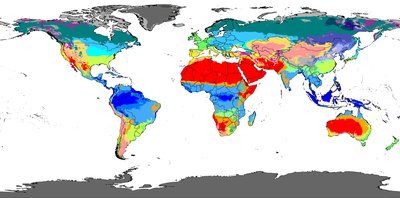
Climate: Kaduna State experiences a typical tropical continental climate with distinct seasonal regimes, oscillating between cool to hot dry and humid to wel. These two seasons reflect the influ- ences of tropical continental and equatorial mar itime airmasses which sweep over the entire coun try. However, in Kaduna State, the seasonality is pronounced with the cool to hot dry season being longer than the rainy season. Again, the spatial and temporal distribution of the rain varies. decreasing from an average of about 1530mm in Kafanchan-Kagoro areas in the Southeast to about 1015mm in Ikara-Makarfi districts in the northeast. High storm intensities (ranging from 60mm hr-1 to 99mm hr-1) plus the nature of surface runoff build up the good network of medium sized river sys- temps High evaporation during the dry season ton however, creates water shortage problems espe cinity in Igabi, Giwa, Soba, Makarfi)and Ikara LGA.
** Historical Development .**
In 1976, when the General Murtala Mohammed administration created seven new states in Nigeria, North Central State, with capital at Kaduna, was renamed Kaduna State. It was made up of the two colonial period Provinces of Zaria and Katsina. When in 1991, the number of states in the country was increased from twenty-one to thirty. Katsina Province became Katsina State, while the old Zaria Province became the new Kaduna State. There are twenty three local government areas (LGAs) in the state, although the number of ethnic groups is much larger.
** Administrative Areas.**
Administration of the state started with the concept of Provincial Administration and Native/Local Authority systems. However, in 1976 the Mohammed Administration introduced the Local Government Area LGA sys- tem which delegated some responsibilities to the elected/appointed councillors. With each succes sive Federal Military Administration, the number of the LGAs in Kaduna State increased from fourteen in early 1980s to the present twenty three in 1998. Table 18.1 gives their listings and respective head- quarters. In each LGA, smaller units such as dis- tricts and wards, are recognised.