
Description
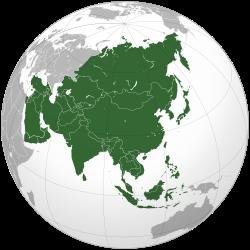
The king cobra ( _ Ophiophagus hannah ) is a venomous snake endemic to Asia. The sole member of the genus _Ophiophagus , it is not taxonomically a true cobra, despite its common name and some resemblance. With an average length of 3.18 to 4 m (10.4 to 13.1 ft) and a maximum record of 5.85 m (19.2 ft), it is the world's longest venomous snake. The species has diversified colouration across habitats, from black with white stripes to unbroken brownish grey. The king cobra is widely distributed albeit not commonly seen, with a range spanning from Indian Subcontinent through Southeastern Asia to Southern China, where it preys chiefly on other snakes, including those of its kind. This is the only ophidian that constructs an aboveground nest for its eggs which are purposefully and meticulously gathered and protected by the female throughout the incubation period.
The threat display of this elapid includes spreading its neck-flap, raising its head upright, making eye contact, puffing, hissing and occasionally charging. Given the size, it is capable of striking at a considerable range and height, sometimes sustaining a bite. Envenomation from this species is medically significant which may result in a rapid fatality unless antivenom is administered in time. Despite its fearsome reputation, altercations usually only arise from one inadvertently exposing itself or being cornered.
Threatened by habitat destruction, it has been listed as Vulnerable on the IUCN Red List since 2010. Regarded as the national reptile of India, it has an eminent position in the mythology and folk traditions of India, Bangladesh, Sri Lanka and Myanmar.