

Description
The Long March (Chinese: 长征; pinyin: Chángzhēng ; lit. 'Long Expedition') was a military retreat during the Chinese Civil War, undertaken by the Communist Red Army, in order to evade continuous pursuit by advancing Nationalist forces. Several different Red Army forces took different routes from different Chinese Communist Party (CCP) strongholds being encircled by the Kuomintang (KMT) National Revolutionary Army, with their concurrent retreats taking place over more than a year, traveling thousands of kilometers through western and central China in order to convene at the new Communist base of operations in Yan'an, located in the northwestern province of Shaanxi.
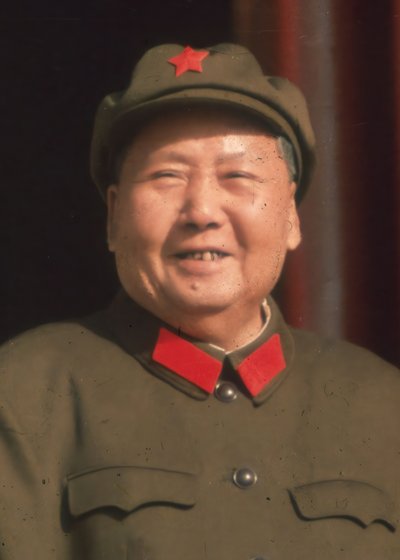
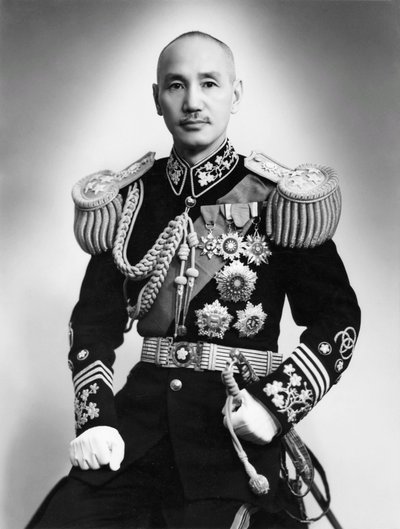
The most famous of these marches was undertaken by the First Red Army under Mao Zedong: departing from their headquarters in the southern province of Jiangxi on 16 October 1934, the First Army marched over 9,000 kilometres (5,600 mi) in a large clockwise arc through the western frontiers of the country, ultimately meeting with Communist forces in Yan'an on 19 October 1935. The circuitous route required the First Army to pass through some of the most difficult terrain in the country while avoiding destruction by the Nationalists: at first the NRA under Chiang Kai-Shek, and later by local cliques of Nationalist-aligned warlords. Ultimately, fewer than 8,000 people traveling with the First Red Army would survive the march, out of a force of more than 65,000 that had set out the year prior. Over the following year, the Second and Fourth Red Armies would continue to navigate and face resistance, with the meeting of the three armies in Yan'an only taking place on 22 October 1936.
Upon arrival, the leadership Mao had demonstrated during the retreat afforded him immense prestige and support among many within the otherwise-shattered Communist Party. The March would achieve mythical status in China and throughout the world as one of the most famous events of the war, for its immense hardship and implausible perseverance in the face of what appeared to be near-certain annihilation. It ultimately marked the beginning of Mao's long ascent to primacy within the CCP, and would be featured heavily in his public image, through the founding of the People's Republic.