
Description
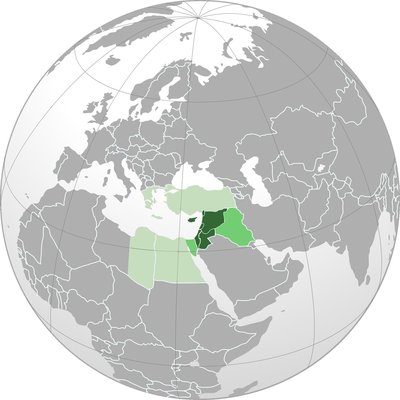
Mitanni (; Hittite cuneiform 𒆳𒌷𒈪𒋫𒀭𒉌 KUR URU _Mi-ta-an-ni__ ; _Mittani 𒈪𒀉𒋫𒉌 Mi-it-ta-ni ), c. 1550–1260 BC, earlier called Ḫabigalbat in old Babylonian texts, c. 1600 BC; Hanigalbat or Hani-Rabbat ( Hanikalbat , Khanigalbat , cuneiform 𒄩𒉌𒃲𒁁 Ḫa-ni-gal-bat, Ḫa-ni-rab-bat ) in Assyrian records, or Naharin in Egyptian texts, was a Hurrian-speaking state with Indo-Aryan linguistic influences in northern Syria and southeast Anatolia (modern-day Turkey). Since no histories, royal annals or chronicles have yet been found in its excavated sites, knowledge about Mitanni is sparse compared to the other powers in the area, and dependent on what its neighbours commented in their texts.
The Hurrians were in the region as of the late 3rd millennium BC. A king of Urkesh with a Hurrian name, Tupkish, was found on a clay sealing dated c. 2300 BC at Tell Mozan. The first recorded inscription of their language was of Tish-atal (c. 21st century BC), king of Urkesh. Later on, Hurrians made up the main population of Mitanni, that was firstly known as Ḫabigalbat , at Babylonia, in two texts of the late Old Babylonian period, during the reign of Ammi-Saduqa, (c. 1646–1626 BC), in middle chronology.
The Egyptian official astronomer and clockmaker Amenemhet (Amen-hemet) apparently ordered to write on his tomb that he returned from the "foreign country called Mtn ( Mi-ti-ni )," but Alexandra von Lieven (2016) and Eva von Dassow (2022) consider that the expedition to Mitanni could have taken place in pharaoh Ahmose I's reign (c. 1550–1525 BC), actually by Amenemhet's father. During the reign of pharaoh Thutmose I (1506–1493 BC), the names Mitanni and Naharin are among the reminiscences of several of the pharaoh's officers. One of them, Ahmose si-Abina, wrote: "...His Majesty arrived at Naharin..." Another one, Ahmose pa-Nekhbit, recorded: "...when I captured for him in the land of Naharin..."
After the Battle of Megiddo, an officer of pharaoh Thutmose III (1479–1425 BC), in the pharaoh's 22 regnal year, reported: "That [wretched] enemy of Kadesh has come and has entered into Megiddo. He is [there] at this moment. He has gathered to him the princes of [every] foreign country [which had been] loyal to Egypt, as well as (those) as far as Naharin and M[itanni], them of Hurru, them of Kode, their horses, their armies." In several later military campaigns the Annals of Thutmose III mention Naharin, in particular those of his regnal years 33, 35, and 42. After that time, records become more available from local sources until the empire's end in the mid-13th century BC.
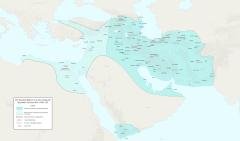
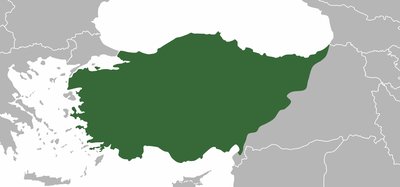
The Mitanni Empire was a strong regional power limited by the Hittites to the north, Egyptians to the west, Kassites to the south, and later by the Assyrians to the east. At its maximum extent Mitanni ranged as far west as Kizzuwatna by the Taurus Mountains, Tunip in the south, Arraphe in the east, and north to Lake Van. Their sphere of influence is shown in Hurrian place names, personal names and the spread through Syria and the Levant of a distinct pottery type, Nuzi ware.
*[c.]: circa