

Description
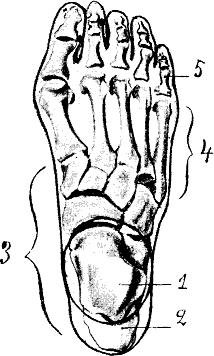
Morton's toe is the condition of having a first metatarsal bone that is shorter than the second metatarsal (see diagram). It is a type of brachymetatarsia. This condition is the result of a premature closing of the first metatarsal's growth plate, resulting in a short big toe, giving the second toe the appearance of being long compared to the first toe.
The metatarsal bones behind the toes are of different lengths, and the relative lengths vary between people. For most feet, a smooth curve can be traced through the joints at the bases of the toes (the metatarsal-phalangeal, or MTP, joints). But in Morton's foot, the line has to bend more sharply to go through the base of the big toe, as shown in the diagram. This is because the first metatarsal, behind the big toe, is short compared to the second metatarsal, next to it. The longer second metatarsal puts the MTP joint at the base of the second toe further forward.
If the big toe and the second toe are the same length (as measured from the MTP joint to the tip, including only the toe bones or phalanges), then the second toe will protrude farther than the big toe, as shown in the photo. If the second toe is shorter than the big toe, the big toe may still protrude the furthest, or there may be little difference.
Morton's Toe News
Tags
Collections
No collections available for this topic.