

Description
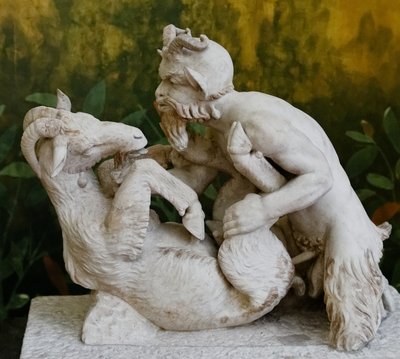
In ancient Greek religion and mythology, Pan (; Ancient Greek: Πάν, romanized: Pán) is the god of the wild, shepherds and flocks, rustic music and impromptus, and companion of the nymphs. He has the hindquarters, legs, and horns of a goat, in the same manner as a faun or satyr. With his homeland in rustic Arcadia, he is also recognized as the god of fields, groves, wooded glens, and often affiliated with sex; because of this, Pan is connected to fertility and the season of spring.
In Roman religion and myth, Pan was frequently identified with Faunus, a nature god who was the father of Bona Dea, sometimes identified as Fauna; he was also closely associated with Silvanus, due to their similar relationships with woodlands, and Inuus, a vaguely defined deity also sometimes identified with Faunus. In the eighteenth and nineteenth centuries, Pan became a significant figure in the Romantic movement of Western Europe and also in the twentieth-century Neopagan movement.