

Description
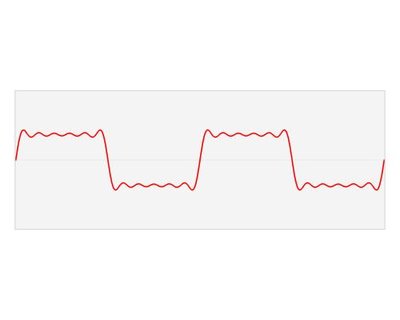
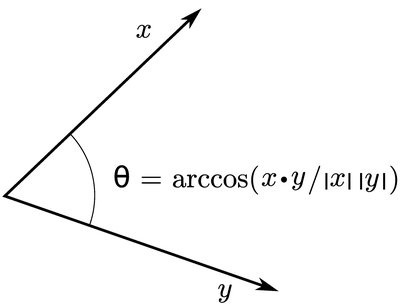
In mathematical analysis, Parseval's identity , named after Marc-Antoine Parseval, is a fundamental result on the summability of the Fourier series of a function. Geometrically, it is a generalized Pythagorean theorem for inner- product spaces (which can have an uncountable infinity of basis vectors).
Informally, the identity asserts that the sum of squares of the Fourier coefficients of a function is equal to the integral of the square of the function,
where the Fourier coefficients c n {\displaystyle c_{n}} of f {\displaystyle f} are given by
More formally, the result holds as stated provided f {\displaystyle f} is a square-integrable function or, more generally, in Lp space L 2 [ − π , π ] . {\displaystyle L^{2}[-\pi ,\pi ].} A similar result is the Plancherel theorem, which asserts that the integral of the square of the Fourier transform of a function is equal to the integral of the square of the function itself. In one-dimension, for f ∈ L 2 ( R ) , {\displaystyle f\in L^{2}(\mathbb {R} ),}