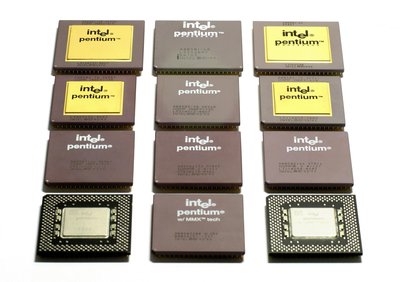

Description
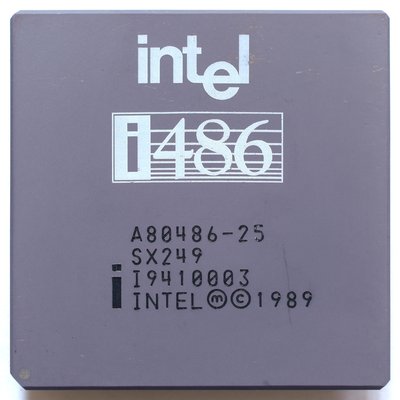
The Pentium (also referred to as P5 , its microarchitecture, or i586 ) is a fifth generation, 32-bit x86 microprocessor that was introduced by Intel on March 22, 1993, as the very first CPU in the Pentium brand. It was instruction set compatible with the 80486 but was a new and very different microarchitecture design from previous iterations. The P5 Pentium was the first superscalar x86 microarchitecture and the world's first superscalar microprocessor to be in mass production—meaning it generally executes at least 2 instructions per clock mainly because of a design-first dual integer pipeline design previously thought impossible to implement on a CISC microarchitecture. Additional features include a faster floating-point unit, wider data bus, separate code and data caches, and many other techniques and features to enhance performance and support security, encryption, and multiprocessing, for workstations and servers when compared to the next best previous industry standard processor implementation before it, the Intel 80486.
Considered the fifth main generation in the 8086 compatible line of processors, its implementation and microarchitecture was called P5. As with all new processors from Intel since the Pentium, some new instructions were added to enhance performance for specific types of workloads.
The Pentium was the first Intel x86 to build in robust hardware support for multiprocessing similar to that of large IBM mainframe computers. Intel worked closely with IBM to define this ability and then Intel designed it into the P5 microarchitecture. This new ability was absent in prior x86 generations and x86 copies from competitors.
To realize its greatest potential, compilers had to be optimized to exploit the instruction level parallelism provided by the new superscalar dual pipelines and applications needed to be recompiled. Intel spent substantial effort and resources working with development tool vendors, and major independent software vendor (ISV) and operating system (OS) companies to optimize their products for Pentium before product launch.
In October 1996, the similar Pentium MMX was introduced, complementing the same basic microarchitecture with the MMX instruction set, larger caches, and some other enhancements.
Competitors included the Motorola 68040, Motorola 68060, PowerPC 601, and the SPARC, MIPS, Alpha families, most of which also used a superscalar in-order dual instruction pipeline configuration at some time.
Intel discontinued the P5 Pentium processors (sold as a cheaper product since the release of the Pentium II in 1997) in early 2000 in favor of the Celeron processor, which had also replaced the 80486 brand.