

Description
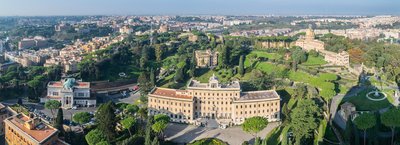
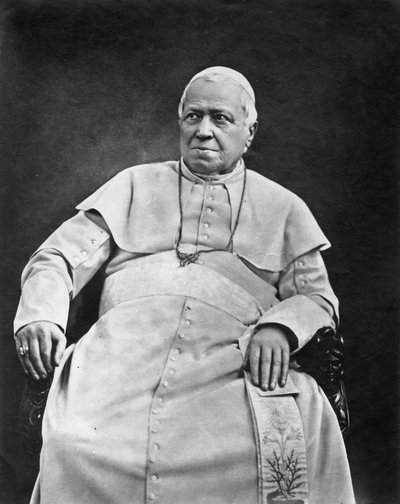
Pope Pius IX (Italian: Pio IX , Pio Nono ; born Giovanni Maria Mastai Ferretti ; 13 May 1792 – 7 February 1878) was head of the Catholic Church from 1846 to 1878, the longest verified papal reign. He was notable for convoking the First Vatican Council in 1868 and for permanently losing control of the Papal States in 1870 to the Kingdom of Italy. Thereafter, he refused to leave Vatican City, declaring himself a "prisoner in the Vatican".
At the time of his election, he was seen as a champion of liberalism and reform, but the Revolutions of 1848 decisively reversed his policies. Upon the assassination of his Prime Minister Rossi, Pius escaped Rome and excommunicated all participants in the short-lived Roman Republic. After its suppression by the French army and his return in 1850, his policies and doctrinal pronouncements became increasingly conservative, seeking to stem the revolutionary tide.
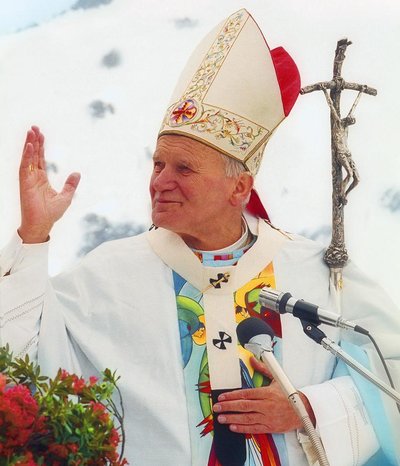
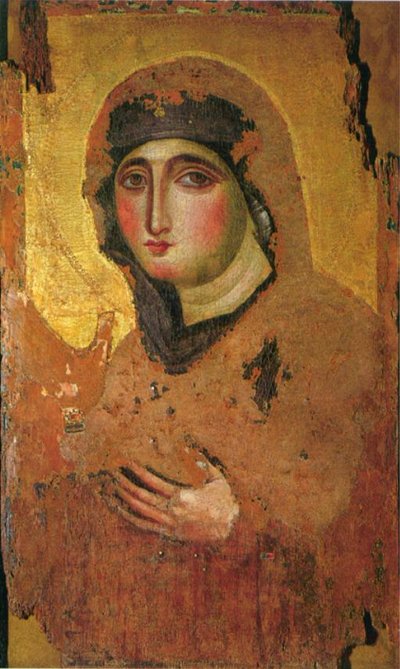
In his 1849 encyclical Ubi primum , he emphasized Mary's role in salvation. In 1854, he promulgated the dogma of the Immaculate Conception, articulating a long-held Catholic belief that Mary, the Mother of God, was conceived without original sin. His 1864 Syllabus of Errors was a strong condemnation of liberalism, modernism, moral relativism, secularization, separation of church and state, and other Enlightenment ideas. Pius definitively reaffirmed Catholic teaching in favor of the establishment of the Catholic faith as the state religion where possible. His appeal for financial support resulted in the successful revival of donations known as Peter's Pence. He strengthened the central power of the Holy See and Roman Curia over the worldwide Catholic Church, while also formalizing the Pope's ultimate doctrinal authority (the dogma of papal infallibility defined in 1870). Pope John Paul II beatified him in 2000.