


Description
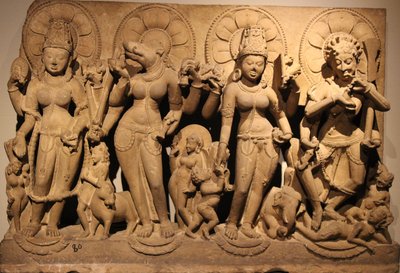
Shaktism (Sanskrit: शाक्त, IAST: Śākta , lit. 'doctrine of energy, power, the eternal goddess') is one of the several major Hindu denominations wherein the metaphysical reality, or the godhead, is considered metaphorically to be a woman.
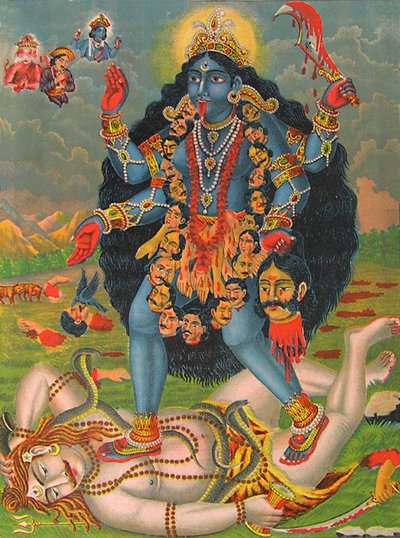
Shaktism involves many goddesses, all being regarded as different aspects or manifestations of the same supreme goddess Shakti. It includes a galaxy of goddesses and various modes of worship, ranging from those focused on the most worshipped Durga, to gracious Parvati, and the fierce Kali. The Sruti and Smriti texts of Hinduism form an important scriptural framework in Shaktism. Scriptures such as the Devi Mahatmya , Devi-Bhagavata Purana , Kalika Purana , and Shakta Upanishads like the Devi Upanishad are revered. The Devi Mahatmya in particular, is considered in Shaktism to be as important as the Bhagavad Gita.
Shaktism also encompasses various tantric sub-traditions, including Vidyapitha and Kulamārga. After the decline of Buddhism in India, various Hindu and Buddhist goddesses were combined to form the Mahavidya, a pantheon of ten goddesses. The most common forms of the Mahadevi worshipped in Shaktism include: Durga, Kali, Saraswati, Lakshmi, Parvati and Tripurasundari. The goddess-focused tradition and festivals such as the Durga puja are very popular in the eastern parts of India, particularly in the states of West Bengal, Odisha, Bihar, Jharkhand, Tripura and Assam. According to a 2010 estimate by Johnson and Grim, Shaktism is the third largest Hindu sect constituting about 30 million or 3.2% of Hindus. An adherent of shaktism is called shakta.
Shaktism emphasizes that intense love of the deity is more important than simple obedience, thus showing an influence of the Vaishnavaite idea of the passionate relationship between Radha and Krishna as an ideal bhava. Similarly, ideas from Shaktism have influenced Vaishnavism and Shaivism; the goddess is considered to be the consort or energy ( shakti ) of the gods Vishnu and Shiva. The Devi is revered in many Hindu temples and is worshipped during various Hindu festivals. Outside of Hinduism, a theological feminine aspect of Godhood was explored in few other traditions.
*[lit.]: literal translation