

Description
The sulfur cycle is a biogeochemical cycle in which the sulfur moves between rocks, waterways and living systems. It is important in geology as it affects many minerals and in life because sulfur is an essential element (CHNOPS), being a constituent of many proteins and cofactors, and sulfur compounds can be used as oxidants or reductants in microbial respiration. The global sulfur cycle involves the transformations of sulfur species through different oxidation states, which play an important role in both geological and biological processes. Steps of the sulfur cycle are:
- Mineralization of organic sulfur into inorganic forms, such as hydrogen sulfide (H2S), elemental sulfur, as well as sulfide minerals.
-
Oxidation of hydrogen sulfide, sulfide, and elemental sulfur (S) to sulfate (SO2−
4). -
Reduction of sulfate to sulfide.
- Incorporation of sulfide into organic compounds (including metal-containing derivatives).
- Disproportionation of sulfur compounds (elemental sulfur, sulfite, thiosulfate) into sulfate and hydrogen sulfide.
These are often termed as follows:
_Assimilative sulfate reduction_ (see also sulfur assimilation) in which sulfate (SO2−
4) is reduced by plants, fungi and various prokaryotes. The oxidation states of sulfur are +6 in sulfate and –2 in R–SH.
_Desulfurization_ in which organic molecules containing sulfur can be desulfurized, producing hydrogen sulfide gas (H2S, oxidation state = –2). An analogous process for organic nitrogen compounds is deamination.
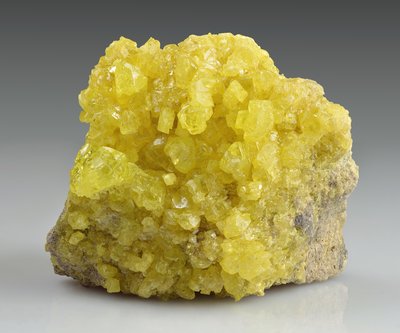
_Oxidation of hydrogen sulfide_ produces elemental sulfur (S8), oxidation state = 0. This reaction occurs in the photosynthetic green and purple sulfur bacteria and some chemolithotrophs. Often the elemental sulfur is stored as polysulfides.
_Oxidation in elemental sulfur_ by sulfur oxidizers produces sulfate.
_Dissimilative sulfur reduction_ in which elemental sulfur can be reduced to hydrogen sulfide.
_Dissimilative sulfate reduction_ in which sulfate reducers generate hydrogen sulfide from sulfate.