

Description
Umbanda (Portuguese pronunciation: [ũˈbɐ̃dɐ]) is a religion that emerged in Rio de Janeiro, Brazil in the 1920s. Deriving largely from Spiritism, it also combines elements from Afro-Brazilian traditions like Candomblé as well as Roman Catholicism. There is no central authority in control of Umbanda, which is organized around autonomous places of worship termed centros or terreiros , and is broadly divided between White Umbanda, which is closer to Spiritism, and Africanized Umbanda, which is closer to Candomblé.
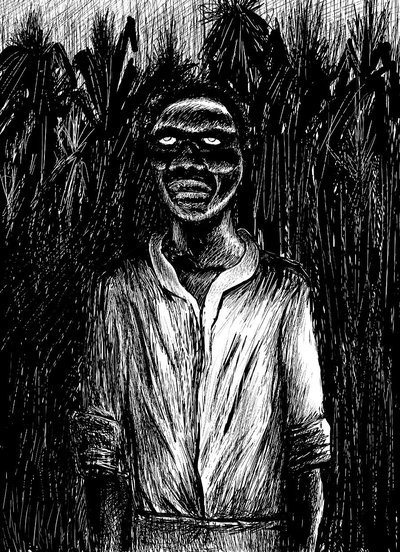
A monotheistic religion, Umbanda believes in a single God that is distant from humanity. Beneath this entity are powerful non-human spirits called orixás ; in White Umbanda these are viewed as divine energies or forces of nature, while in African-oriented forms they are seen as West African deities and are offered animal sacrifices. The emissaries of the orixás are the pretos velhos and caboclos , spirits of enslaved Africans and of indigenous Brazilians respectively, and these are the main entities dealt with by Umbandists. At Umbandist rituals, spirit mediums sing and dance in the hope of being possessed by these spirits, through whom the congregations receive guidance, advice, and healing. Umbanda teaches a complex cosmology rooted in spiritual evolution through a system of reincarnation according to the law of karma. The religion's ethical systems emphasise charity and social fraternity.
Umbanda was established by Zélio Fernandino de Moraes and those around him in Niterói during the 1920s. He had been involved in Spiritism but disapproved of the negative attitude that many Spiritists held towards contact with the spirits common in Afro-Brazilian religious traditions. Umbanda gained increased social recognition and respectability amid the military dictatorship of 1964 to 1985, despite growing opposition from both the Roman Catholic Church and Pentecostal groups. Since the 1970s, Umbanda has seen some decline, in places due to the resurgent popularity of Candomblé.
In its heyday of the 1960s and 1970s, Umbanda was estimated to have between 10 and 20 million followers in Brazil. In the 21st century, hundreds of thousands of Brazilians identify as Umbandists. Umbanda is found primarily in urban areas of southern Brazil although has spread throughout the country and to other parts of the Americas.